Free delivery on orders over $25!* (*Based on your postal code.)

French Baguette

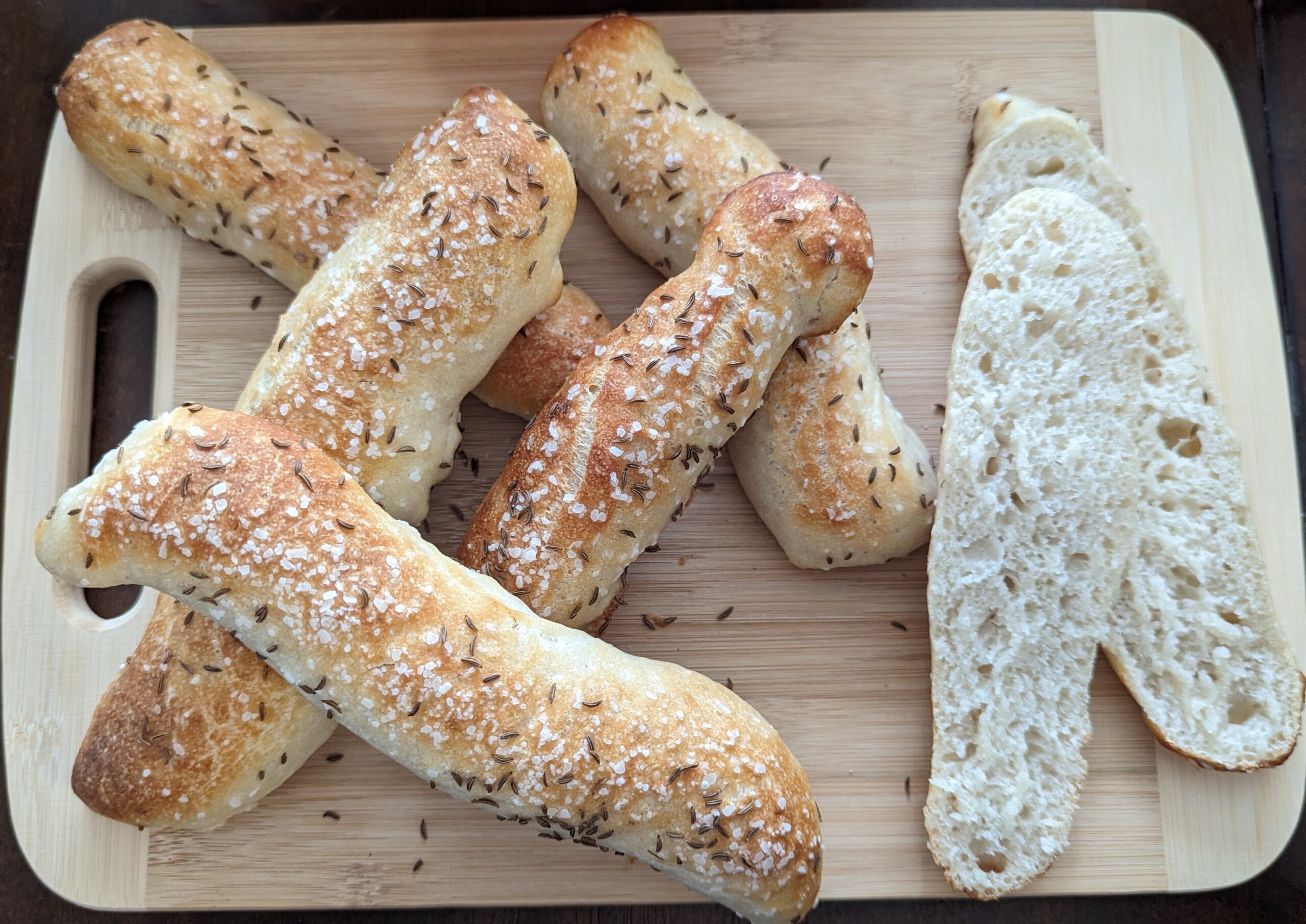
The French baguette is a culinary masterpiece, a symbol of French culture, and a beloved staple in bakeries and homes around the world. But what makes this long, slender loaf of bread so special?
First and foremost, it’s the crust. A good baguette should have a thin, crispy outer layer that gives way to a soft, airy interior. This is achieved through a combination of high-quality flour, water, salt, and yeast, as well as proper baking techniques. The dough is first left to rise, or ferment, which creates the characteristic texture and flavor of the bread. It is then shaped into the classic baguette shape and baked in a very hot oven, which helps to create the perfect crust.
But the crust is only part of the story. The flavor of a baguette is also influenced by the type of flour used and the length of time it is left to rise. Traditional French baguettes are made with wheat flour, although some bakers may also use a mixture of wheat and other grains. The dough is typically left to rise for several hours, which helps to develop the flavor and texture of the bread.
Of course, no discussion of the French baguette would be complete without mentioning its versatility. Whether it’s used as a base for a classic sandwich or simply enjoyed on its own with a bit of butter, there are countless ways to enjoy this delicious loaf of bread. It is also an integral part of many French meals, serving as the perfect accompaniment to a bowl of soup or a platter of cheese and charcuterie.
So the next time you sink your teeth into a warm, crusty baguette, take a moment to appreciate the craftsmanship and tradition that went into its creation. Whether you’re in Paris or halfway around the world, this iconic bread is a true taste of France.